Choosing between KNX, DALI, and Zigbee can be confusing because all three are associated with smart lighting, yet they solve different problems. KNX is a complete building automation platform, DALI is a specialist digital lighting-control protocol, and Zigbee is a wireless mesh technology commonly used for connected devices.
The right choice depends on the scale of the project, the stage of construction, the required reliability, the range of systems being controlled, and the level of long-term flexibility expected. In many professional projects, the best answer is not one protocol alone but a carefully designed combination.
Quick answer: KNX, DALI, or Zigbee?
- Choose KNX when you need a robust, scalable automation backbone for lighting, HVAC, blinds, sensors, energy management, and other building functions.
- Choose DALI when individual luminaires, groups, scenes, dimming, colour control, monitoring, or emergency-lighting functions must be managed precisely.
- Choose Zigbee when wireless installation, retrofit flexibility, or a broad ecosystem of smart-home devices is the main priority.
- Combine KNX and DALI when a building needs both whole-building automation and professional luminaire-level control.
What is KNX?
KNX is an open standard for home and building automation. It can coordinate lighting, HVAC, blinds, curtains, sensors, access functions, energy monitoring, visualisation, and many other systems through one interoperable platform.
KNX is particularly strong when a project needs decentralised intelligence and long-term independence from a single manufacturer. Devices from different certified brands can share a common data structure, while the system can be expanded or reprogrammed as the building changes.
Where KNX performs best
- New-build villas and luxury residences
- Hotels, offices, schools, hospitals, and commercial buildings
- Projects requiring coordinated lighting, HVAC, blinds, and sensors
- Installations where reliability and long service life are priorities
- Buildings that need central supervision together with local control
Important KNX considerations
KNX normally requires dedicated bus cabling, compatible devices, structured engineering, and professional ETS programming. The initial cost is usually higher than a small wireless system, but the architecture is designed for projects where stability, maintainability, and multi-system integration justify the investment.
What is DALI?
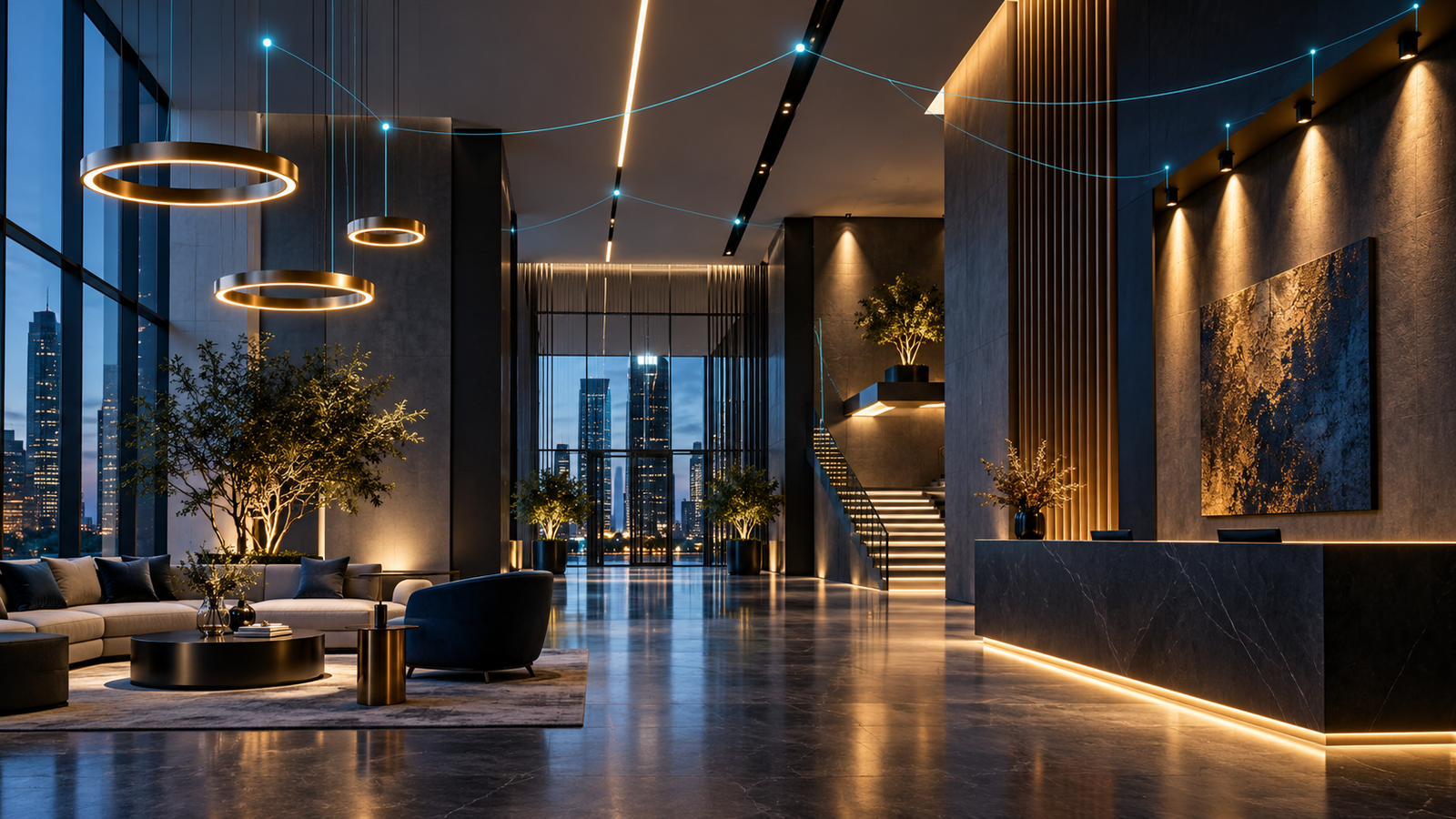
DALI—Digital Addressable Lighting Interface—is designed specifically for digital lighting control. It enables commands to be sent to individual drivers, groups, or an entire DALI line. Scenes allow multiple luminaires to recall predefined brightness or colour values efficiently.
DALI-2 extends standardisation to control devices such as application controllers, sensors, and input devices. A DALI-2 subnet can support up to 64 control gear and 64 control devices, although the practical design must also consider power-supply capacity, topology, commissioning strategy, and the selected gateway or controller.
Where DALI performs best
- Architectural dimming with individually addressable luminaires
- Hotels, offices, retail, hospitality, museums, and public buildings
- Projects requiring groups and scenes without rewiring switched circuits
- Tunable-white or colour-control applications using compatible device types
- Emergency-lighting monitoring with suitable DALI emergency control gear
- Projects where driver status and diagnostic information are valuable
Important DALI considerations
DALI controls lighting; it is not a complete replacement for a building automation platform. If the project also needs HVAC, blinds, room logic, visualisation, and other services, DALI is often connected to KNX or a building-management system through an appropriate gateway.
Driver compatibility and certification matter. A well-designed system should use suitable DALI or DALI-2 products, document addresses and groups, define scene ownership clearly, and include a commissioning and testing plan. For a deeper introduction, see our guide to DALI lighting systems.
What is Zigbee?
Zigbee is a low-power wireless mesh solution used by lighting products, sensors, switches, plugs, locks, and many other connected devices. In a mesh network, suitable mains-powered nodes can relay messages, helping the network reach beyond the direct radio range of a single coordinator.
Zigbee is attractive for retrofits because it can reduce the need for new control cabling. It is also widely available in consumer and residential products, allowing relatively fast deployment of app control, sensors, schedules, and scenes.
Where Zigbee performs best
- Existing homes where new bus cabling is difficult
- Apartments and smaller residential projects
- Wireless sensors, switches, lamps, and retrofit controls
- Projects requiring fast installation and easy expansion
- Applications where some flexibility is more important than deterministic wired control
Important Zigbee considerations
Wireless performance depends on building materials, device placement, radio interference, the quality of routers and coordinators, and the way the network is commissioned. Battery-powered devices generally do not act as mesh routers, so simply adding more sensors does not automatically strengthen the network.
Interoperability can also vary by product profile, certification, gateway, and manufacturer implementation. A professional design should verify device compatibility before procurement and should not assume that every Zigbee-branded product will expose every feature through every hub.
KNX vs DALI vs Zigbee: direct comparison
| Criterion | KNX | DALI | Zigbee |
|---|---|---|---|
| Primary purpose | Whole-building automation | Digital lighting control | Wireless connected devices |
| Typical medium | Twisted-pair bus, IP, RF and other KNX media | Two-wire DALI bus | Wireless mesh |
| Main strength | Multi-system integration and long-term scalability | Individual luminaire control, groups, scenes and feedback | Retrofit flexibility and reduced control wiring |
| Typical project size | From advanced homes to large buildings | Single rooms to large lighting installations through multiple lines | Homes, apartments and selected commercial applications |
| Lighting depth | Strong when paired with suitable actuators or gateways | Purpose-built for professional lighting | Depends heavily on devices and gateway |
| Other building systems | Excellent | Limited; lighting-focused | Available, but ecosystem-dependent |
| Retrofit suitability | Possible, but wired installations are easiest when planned early | Best when compatible drivers and bus wiring are provided | Very good where wireless control is appropriate |
| Commissioning | ETS engineering and device programming | Addressing, grouping, scenes and system testing | Pairing, binding, gateway setup and radio-network validation |
Are KNX, DALI, and Zigbee competitors?
Only partly. KNX and Zigbee can both automate rooms and buildings, but their architecture and typical use cases differ. DALI overlaps with both in lighting control, yet its core role is narrower and more specialised.
A practical way to understand the relationship is:
- KNX decides what the building should do.
- DALI executes detailed lighting behaviour at driver level.
- Zigbee connects selected devices wirelessly where that architecture makes sense.
This is a simplification, but it explains why KNX and DALI are frequently combined rather than selected against each other.
When KNX and DALI should be combined
A KNX–DALI solution is often the strongest approach for premium residences, hotels, offices, and complex commercial projects. KNX can integrate room controls, HVAC, curtains, presence sensors, time schedules, central commands, and visualisation. DALI can then manage the luminaires, brightness levels, groups, scenes, tunable-white channels, and diagnostic data.
The gateway becomes the bridge between the two systems. Its channel capacity, supported DALI device types, emergency functions, colour-control features, scene behaviour, and feedback objects should be checked during design—not after installation.
This combination is especially useful when architects want flexible lighting scenes while facility teams need central supervision and maintainable system documentation.
When Zigbee is the better choice
Zigbee may be the better solution when the building is already finished, cable installation would be disruptive, the scope is limited, or the client prioritises a consumer-friendly wireless ecosystem. It can also complement a wired system through a carefully selected gateway.
However, a wireless solution should not be chosen only because it appears simpler. Radio coverage, local control during internet failure, gateway dependence, product replacement, cybersecurity, and future compatibility should all be evaluated.
Which system is best for a villa?
For a new high-end villa, KNX is often the strongest backbone because lighting, air conditioning, curtains, sensors, and visualisation can be designed together. DALI is valuable when the lighting specification includes many dimmable drivers, individual addressing, extensive scenes, or tunable-white control.
For an existing villa or a smaller renovation, Zigbee can be practical if wireless conditions are suitable and the chosen ecosystem is tested as a complete solution.
Which system is best for commercial and hospitality projects?
Commercial buildings and hotels typically benefit from wired, documented systems. KNX is suitable for room and building functions, while DALI provides the depth needed for professional lighting. Zigbee may still be useful for selected sensors or retrofit zones, but it should be evaluated against operational requirements, maintenance procedures, network density, and the consequences of communication failure.
Choosing KNX, DALI, or Zigbee for Projects in Oman
For projects in Oman, the decision should reflect more than the initial equipment cost. New villas, hotels, offices, and commercial buildings benefit from planning the control architecture before electrical first-fix work begins. Early coordination makes it easier to provide KNX bus cabling, DALI control lines, suitable distribution-board space, gateways, sensors, and correctly specified dimmable drivers.
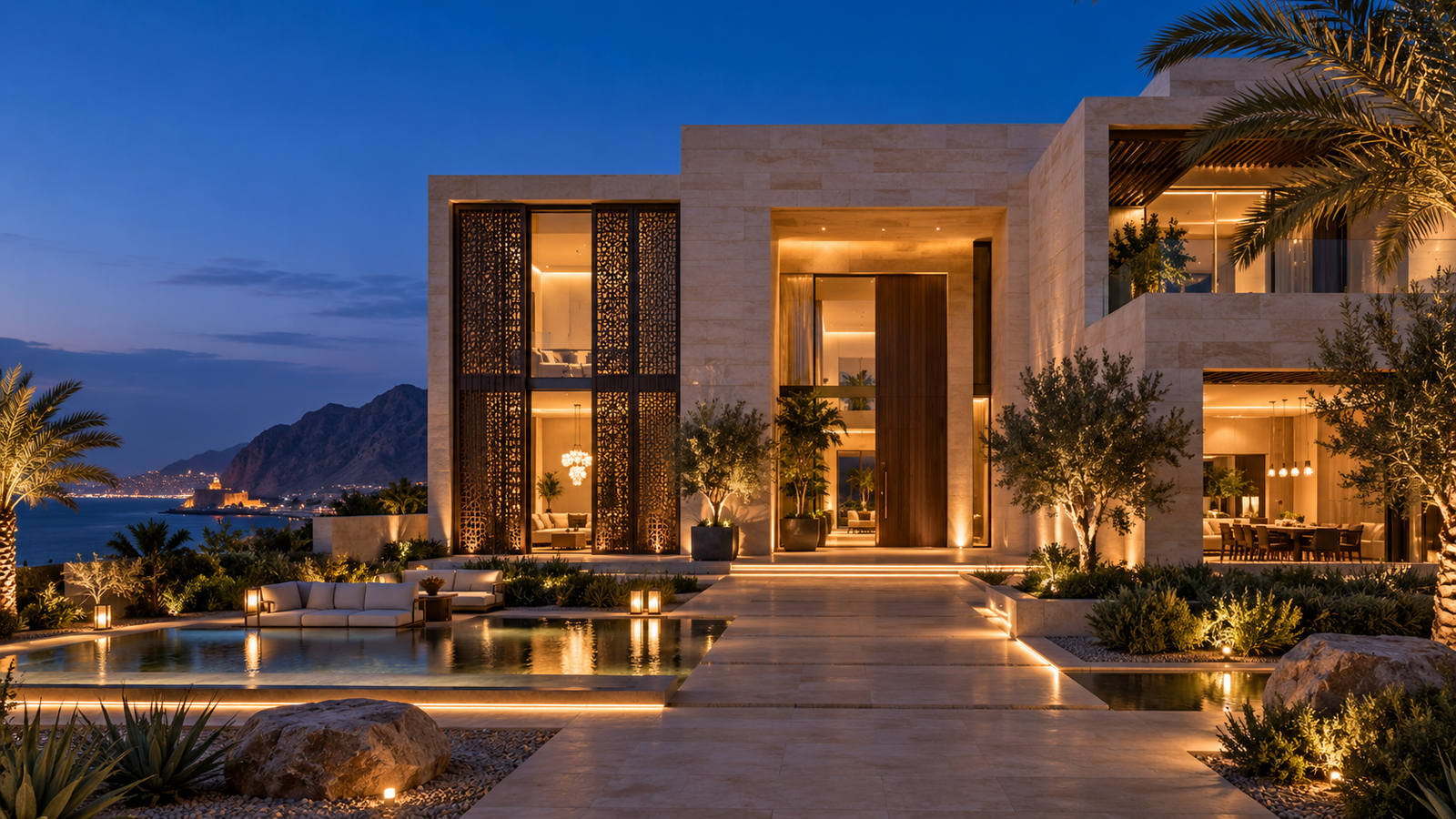
In a new premium villa, a combined KNX and DALI architecture often provides the strongest long-term result: KNX coordinates lighting, air conditioning, curtains, sensors, and central functions, while DALI delivers detailed luminaire control and flexible scenes. Zigbee can remain useful for selected retrofit areas or wireless accessories where additional cabling is impractical.
See our KNX smart-home planning guide for villas in Oman, or contact NORIX for a project-specific recommendation.
How to choose the right architecture
- Define the scope: lighting only, or lighting plus HVAC, blinds, energy, security, and visualisation?
- Review the construction stage: a new build offers different wiring opportunities from a completed property.
- List the required lighting functions: switching, dimming, scenes, tunable white, RGBW, monitoring, and emergency testing.
- Set reliability expectations: consider what must continue operating if a gateway, network, or internet connection fails.
- Check product interoperability: certifications and protocol names do not replace project-level compatibility testing.
- Plan commissioning: addresses, group logic, naming, scene ownership, backups, and as-built documentation should be defined.
- Consider lifecycle cost: include engineering, wiring, gateways, replacement products, maintenance, and future modifications—not only device prices.
Final recommendation
There is no universal winner. KNX is usually the best foundation for comprehensive building automation. DALI is the strongest specialist option for professional digital lighting control. Zigbee is highly useful when wireless flexibility and retrofit convenience are priorities.
For many demanding projects, a hybrid architecture delivers the best result: KNX as the automation backbone, DALI for luminaires, and Zigbee only where wireless devices provide a clear practical advantage.
NORIX supports architectural lighting design, KNX and smart-control engineering, lighting supply, programming, testing, and commissioning. Contact our team to select an architecture based on the actual requirements of your project.