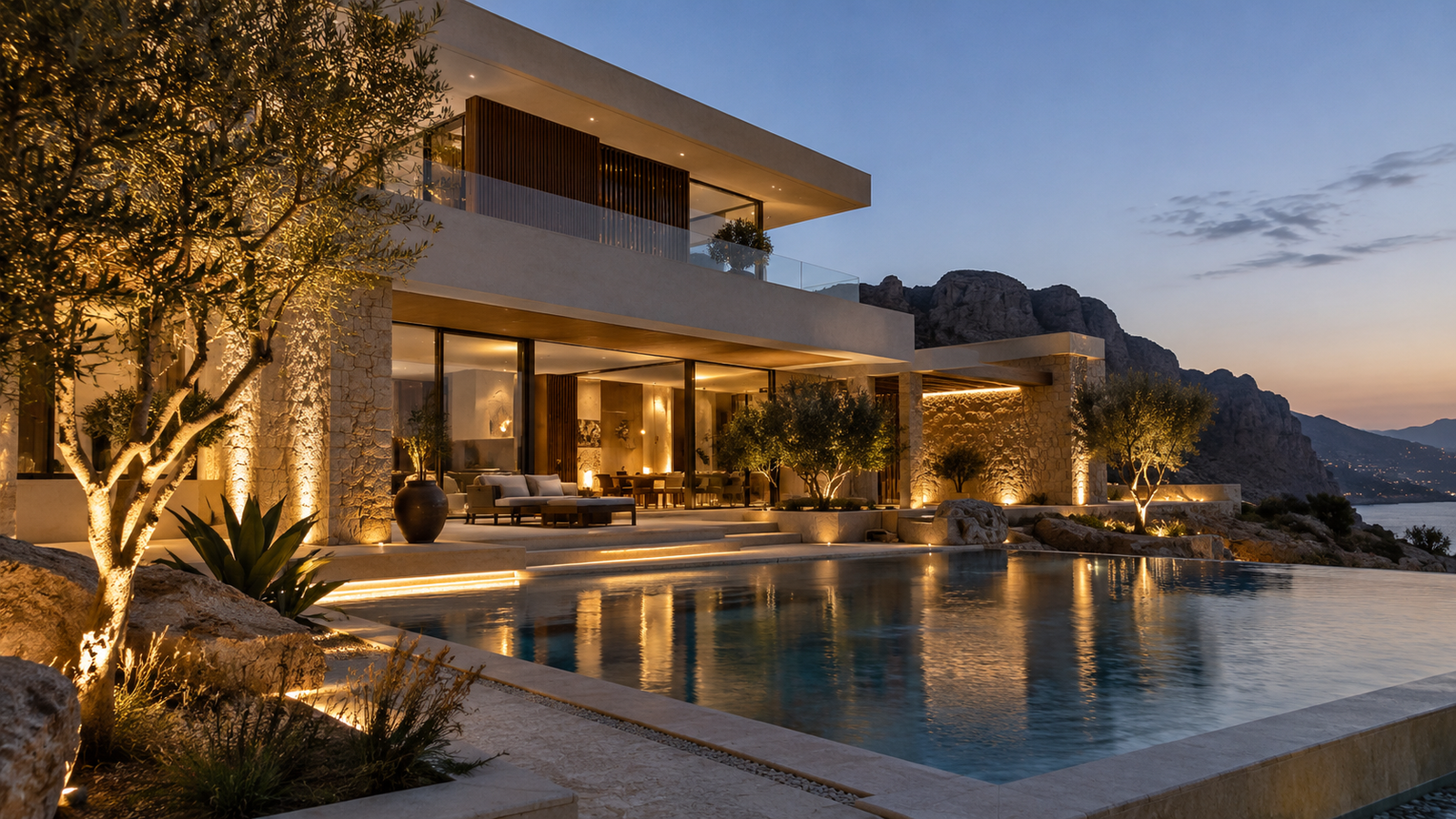
Outdoor lighting design in Oman should make a garden useful after sunset while preserving its atmosphere. A well-planned scheme helps people find the entrance, move along paths, enjoy outdoor seating, and appreciate selected trees and materials without uncomfortable brightness.
For villas, hospitality spaces, and landscaped commercial projects, the design needs to address heat, dust, irrigation, coastal exposure, and maintenance. Choosing attractive fixtures is only one part of that process.
Begin With How the Outdoor Space Is Used
Mark the main entrance, pedestrian paths, parking, steps, dining area, seating, planting, and service access on the landscape plan. Then consider what users should see from each position, including the view from inside the house.
A garden does not need the same lighting everywhere. Circulation needs clear visual guidance, seating needs comfort, and selected landscape features can provide depth. Keep quieter areas between these layers so the space remains restful.
Coordinate the outdoor concept with the building. Our guide to facade lighting design in Oman explains how architectural illumination can support the overall composition.
Pathway Lighting: Light the Ground Comfortably
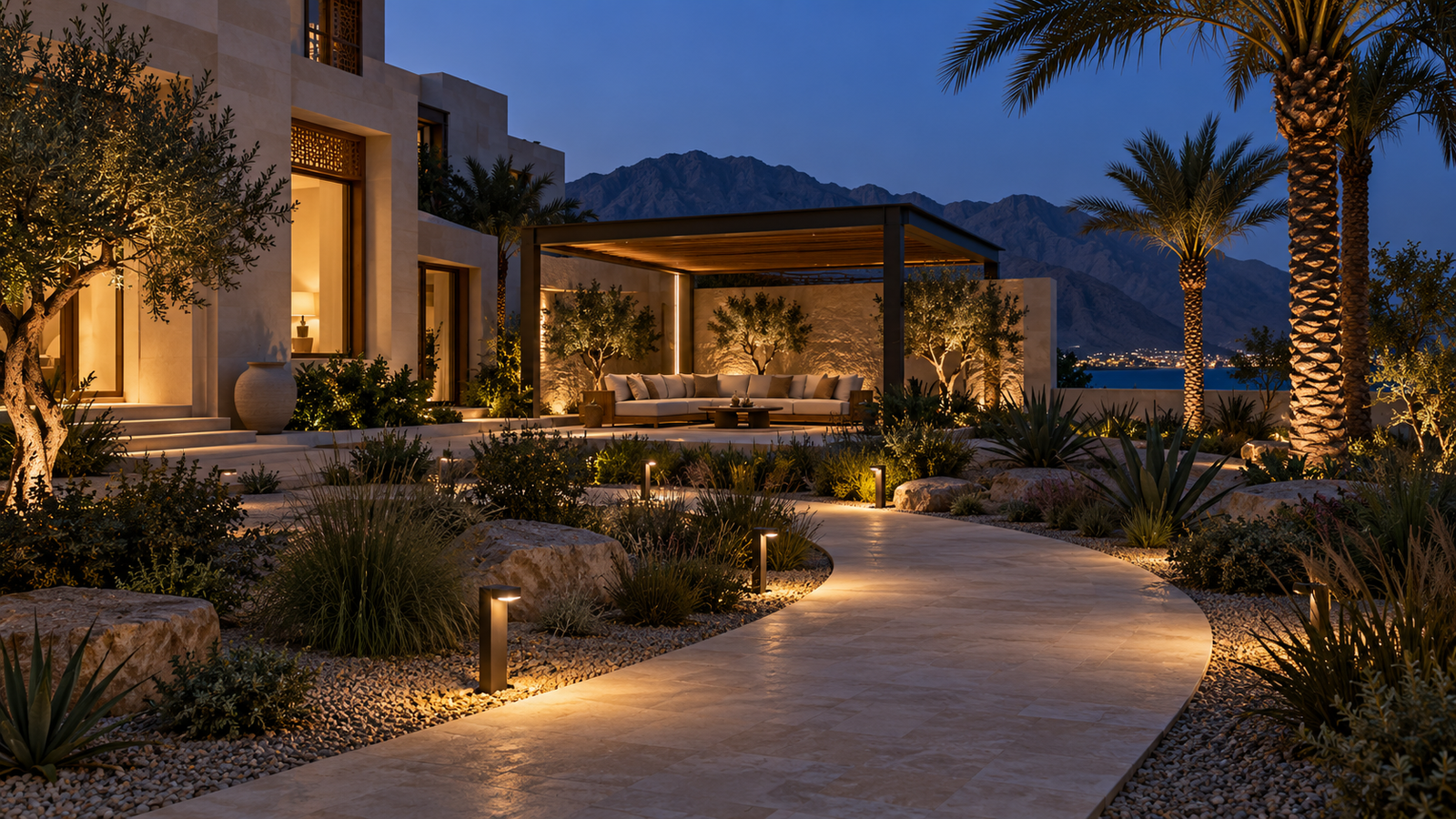
Choose shielded bollards, discreet wall lights, or suitable low-level fixtures that direct light onto the walking surface. Evaluate bends, changes of level, gates, and junctions rather than installing lights at arbitrary equal intervals.
Spacing depends on mounting height, optics, path width, and the surrounding brightness. Review the photometric distribution and check the effect on site. An exposed bright source can make the next darker section harder to see.
Keep fixtures clear of planting growth and maintenance equipment. Where a path runs close to a bedroom or neighbouring property, check spill light from the actual viewing positions.
Lighting Trees, Palms, and Planting
Use a few selected trees as visual anchors. The beam should suit the shape of the plant: a tall slender palm needs a different distribution from a broad canopy. Position and aim each fitting to reveal the intended trunk or foliage while limiting light beyond it.
Adjustable projectors can be useful where plants will grow or the landscape may change. Recessed fittings provide a discreet appearance, but require careful drainage, access, and cleaning. Leaves, soil, and mulch can obstruct light.
Aim tree lighting at night and review it as the planting develops. Avoid illuminating every tree equally; a restrained sequence of foreground and background accents can create depth.
Outdoor Seating and Dining Areas
Assess glare from seated eye level. A fitting that seems comfortable while standing can become intrusive from a low sofa or dining chair. Concealed pergola lighting, shielded downlights, and gentle illumination of adjacent surfaces can support a relaxed setting.
Provide practical light on the table or cooking area where needed, and allow it to be controlled separately from decorative garden lighting. Dimming helps adapt the space for dining, conversation, and cleaning.
Steps, Walls, and Level Changes
Step lighting should make edges and changes in level visible. Coordinate recessed wall lights or concealed linear details with the stair construction before finishes are completed. Check shadows and reflections on the selected paving.
Outdoor stairs should remain legible when decorative scenes are dimmed. Do not rely only on a tree spotlight or distant facade light to illuminate an essential route.
Choosing Warm White Light
Warm white around 2700K or 3000K is often a useful starting point for residential gardens with beige stone, timber, and warm finishes. Confirm the result with samples rather than relying on a colour-temperature label alone.
Specify consistent LED colour across the installation. Consider how the garden relates to indoor lighting visible through glazing and to the facade. A coordinated palette usually creates a calmer overall view.
Specifying Outdoor Luminaires for Oman
Specify equipment for its actual exposure. Dust and water protection matter, but an IP rating does not describe every aspect of durability. Review the manufacturer’s temperature limits, materials, finish, installation instructions, and maintenance provisions.
- Check ambient-temperature ratings for both luminaires and drivers.
- Consider corrosion resistance in coastal locations.
- Use suitable cable, glands, connectors, and junction-box sealing.
- Coordinate recessed fittings with drainage and irrigation.
- Provide access to drivers and connection points.
- Check impact resistance where vehicles or garden equipment operate.
For low-voltage lighting, cable lengths and loads must be checked for voltage drop. Keep power supplies accessible and suited to their installation environment. Electrical protection and installation details should be designed by the project’s qualified electrical team.
Controls: Separate Everyday Light From Decorative Light
A useful control arrangement separates paths and entrances, seating, landscape accents, and service lighting. Sunset schedules can switch on the evening scene, while a later schedule reduces or switches off decorative zones.
Motion sensing may suit a service route or entrance, but needs careful placement and timing. Keep the essential route usable when decorative lights are off. Avoid repeated abrupt changes in a seating area.
Compatible DALI drivers and KNX control can support dimming, scenes, and integration. The selected equipment determines the available functions. Explore NORIX’s smart lighting and home control service and our DALI introduction for more detail.
Protect the Nighttime Setting
Use the lowest practical output, shield direct views of sources, and avoid unnecessary light into the sky, neighbouring windows, or sensitive planting areas. Timers and dimming reduce operating hours as well as brightness.
For sites near protected habitats or coastal wildlife areas, confirm project-specific environmental requirements before selecting the lighting approach. Warm colour alone does not eliminate ecological effects.
Mock-Up, Commission, and Maintain
Test representative fixtures on the actual paving and planting before committing to the complete installation. Walk the routes, sit in the outdoor furniture, and review the view through the windows.
At handover, record aiming, scene levels, timer settings, and equipment details. Plan periodic cleaning and inspections, including checks after landscape or irrigation changes. A lighting scheme needs adjustment as the garden matures.
Frequently Asked Questions
How many lights does a garden need?
There is no reliable number based only on area. The layout, uses, fixture optics, planting, and required visual comfort determine the quantity.
Are solar lights suitable for every landscape project?
Suitability depends on solar exposure, battery capacity, runtime, output, and maintenance. Evaluate these against the required operating schedule before choosing between solar and wired systems.
Should all garden lights operate throughout the night?
No. Separate essential routes from decorative accents and set schedules to match actual use.
Plan Your Outdoor Lighting With NORIX
NORIX Lighting Ideas supports lighting design, product selection and supply, and lighting-control coordination. Contact NORIX with your landscape plan, location, project stage, and intended uses to discuss a coordinated outdoor lighting scheme.
Further reading: ERCO’s guidance on lighting trees and palms.