Successful villa lighting design is not about filling every ceiling with downlights. It is about creating the right balance of comfort, atmosphere, visual clarity, energy efficiency, and control for the way each space is actually used.
In Oman, villa lighting also needs to respond to local architecture, strong daylight, warm materials, outdoor living, high ambient temperatures, and the different requirements of family areas, guest spaces, majlis rooms, façades, and gardens. This room-by-room guide explains how to plan a coordinated lighting scheme from the early design stage through installation and commissioning.
Start With a Lighting Plan, Not a Fixture List
A professional lighting plan begins with the architecture and the activities that will take place in each area. Furniture layouts, ceiling details, wall finishes, artwork, joinery, circulation routes, and daylight all affect where light should come from and how it should be controlled.
Before selecting decorative fixtures, define the purpose of every lighting layer:
- Ambient lighting provides comfortable general illumination.
- Task lighting supports activities such as cooking, reading, dressing, and working.
- Accent lighting highlights architecture, artwork, textures, and landscape features.
- Decorative lighting adds character and becomes part of the interior design.
These layers should work together. Relying on one fixture type usually produces flat, overly bright spaces with poor visual comfort.
Entrance, Foyer and Staircase Lighting
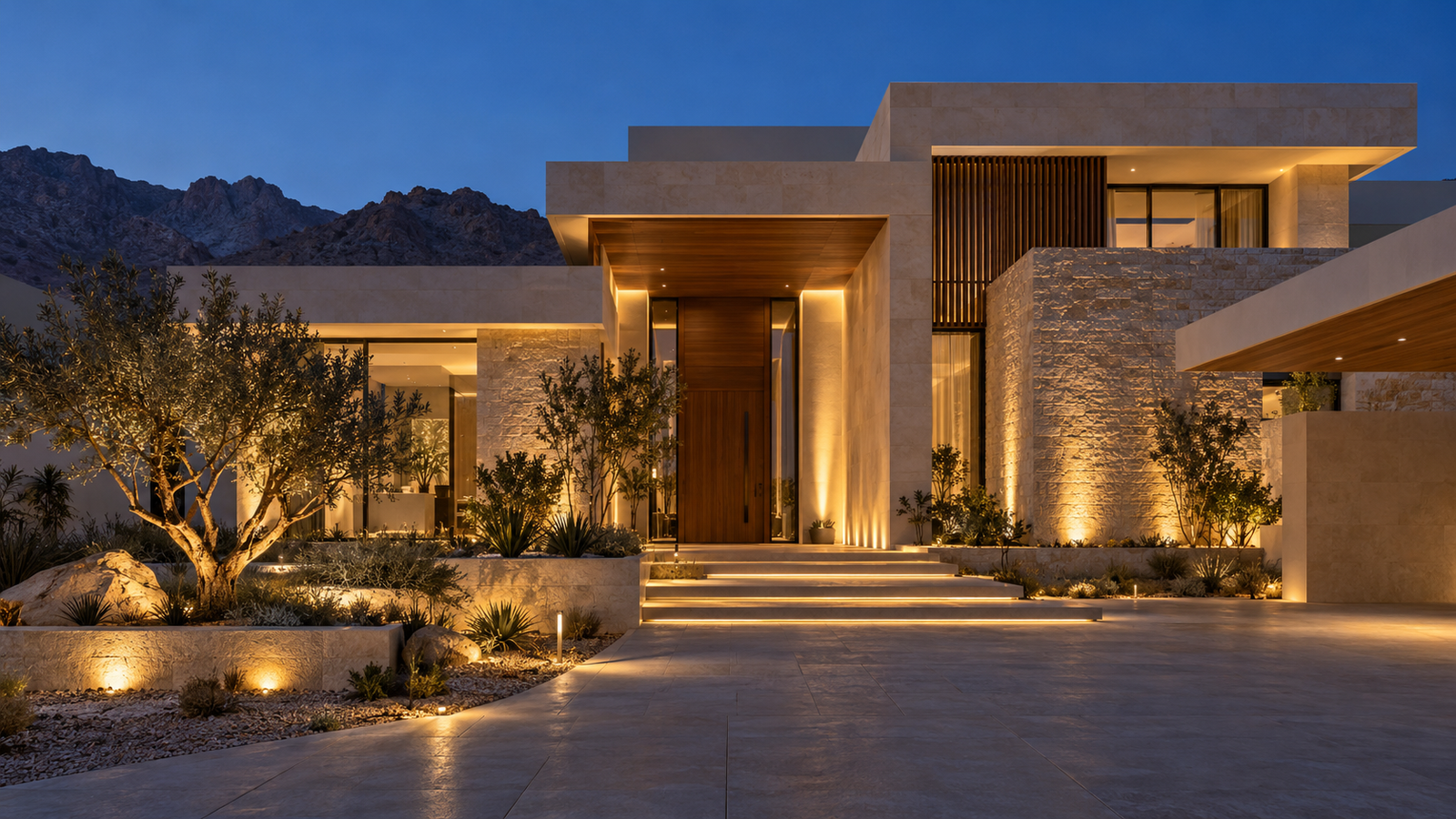
The entrance creates the first impression of the villa. Lighting should guide visitors clearly from the gate to the front door while revealing important architectural elements without glare.
Inside the foyer, combine soft general light with accent lighting for feature walls, artwork, decorative screens, or double-height architecture. Staircases need safe, consistent illumination on every tread. Integrated step lights, concealed handrail lighting, or carefully positioned wall lights can improve safety while maintaining a refined appearance.
Majlis and Formal Reception Areas
The majlis often needs to support both formal hospitality and relaxed conversation. A single bright lighting level is rarely suitable for every occasion. Use multiple circuits and scenes so the space can change between welcoming, entertaining, and quiet evening settings.
A balanced scheme may include concealed ceiling light, decorative pendants or chandeliers, wall washing, and focused light for artwork or architectural details. Warm colour temperatures usually complement timber, stone, fabrics, and metallic finishes, while good glare control keeps guests comfortable.
Living and Family Rooms
Family spaces should feel flexible rather than over-lit. Avoid placing downlights in a rigid grid without considering seating, television position, circulation, or focal walls.
Indirect lighting can create a soft base layer, while adjustable accent lights add depth. Floor lamps, table lamps, joinery lighting, and dimmable ceiling fixtures allow the room to adapt for daily use, entertaining, reading, or watching television. Where possible, separate lighting groups so users can select a scene instead of controlling every circuit individually.
Kitchen and Dining Lighting
Kitchens need accurate task lighting on worktops, sinks, islands, and cooking areas. Ceiling fixtures alone can leave shadows when users stand between the light source and the work surface. Under-cabinet lighting and properly positioned linear or directional fixtures solve this problem.
Colour quality is important because food, finishes, and materials should appear natural. The dining area can be warmer and more atmospheric, with a pendant or decorative fixture positioned in relation to the table. Dimming allows the same zone to work for family meals and formal occasions.
Bedroom Lighting
Bedroom lighting should support rest, dressing, reading, and circulation at night. Use soft ambient light with dedicated bedside reading lights and practical wardrobe illumination. Controls should be available near both the entrance and the bed so occupants do not need to cross a dark room.
Avoid uncomfortable glare from exposed lamps or downlights directly above the bed. Concealed lighting, wall lights, and carefully aimed fixtures usually create a calmer result.
Bathroom and Vanity Lighting
Bathrooms require a combination of functional and atmospheric light. Vanity lighting should illuminate the face evenly from the front or sides; a single ceiling downlight can create strong shadows.
Fixtures must be selected according to the wet-area zone and required protection rating. Night lighting at a low level can improve comfort without activating the full bathroom lighting scene.
Facade and Landscape Lighting
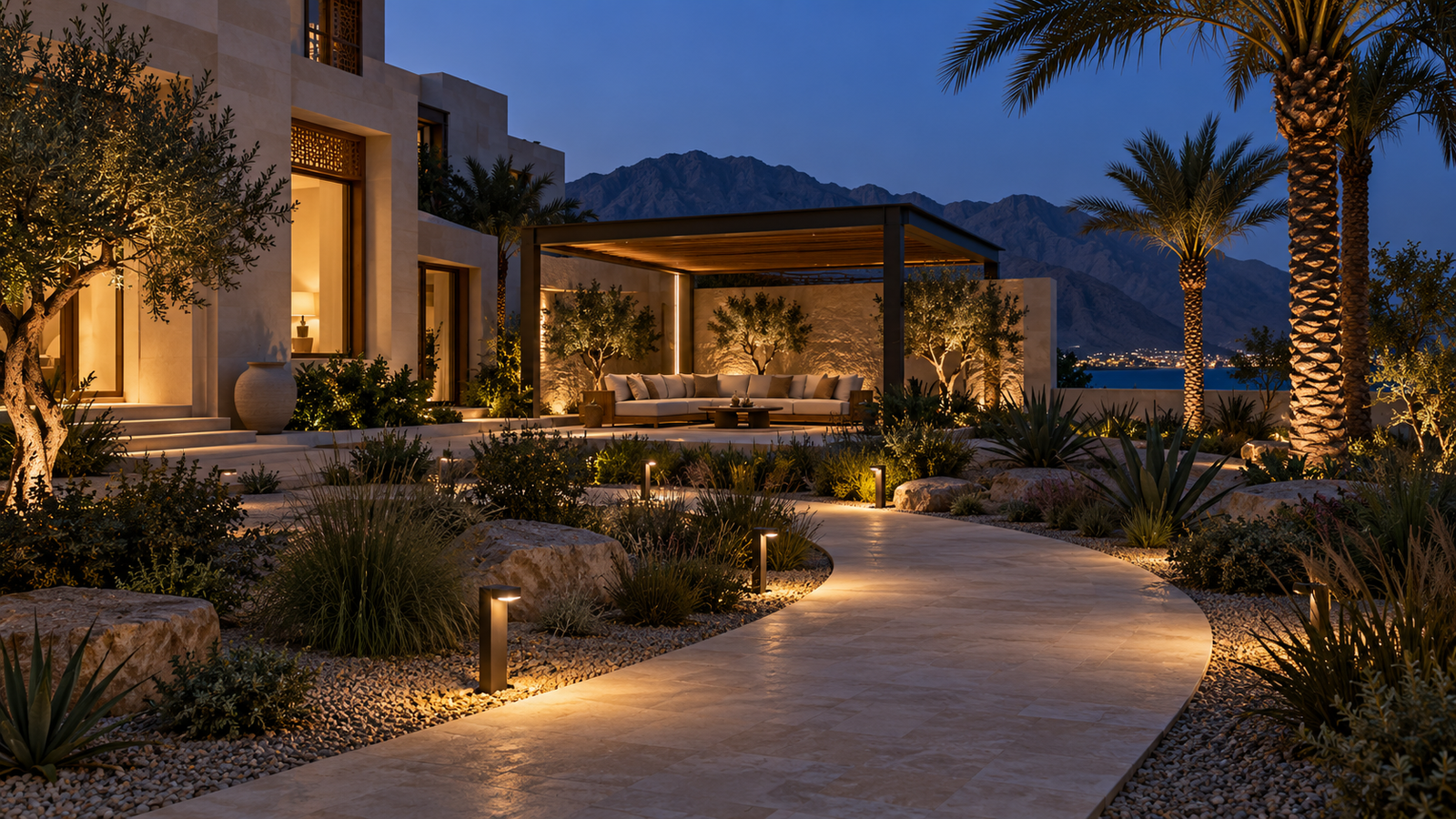
Exterior lighting should reveal the architecture without turning the villa into a floodlit object. The best results come from selective emphasis: entrances, textured walls, columns, planting, paths, steps, and key landscape elements.
For Oman’s climate, exterior fixtures need suitable ingress protection, corrosion resistance, thermal performance, and reliable drivers. Positioning must control glare for residents, neighbours, pedestrians, and drivers. Timers, astronomical schedules, and scene control can reduce unnecessary operating hours and energy use.
Colour Temperature and Light Quality
Colour temperature should be coordinated across connected spaces. Warm white light is commonly used in residential interiors because it supports a comfortable atmosphere and works well with many luxury finishes. Slight variations may be appropriate for task areas, but uncontrolled mixing of visibly different colour temperatures can make the design feel inconsistent.
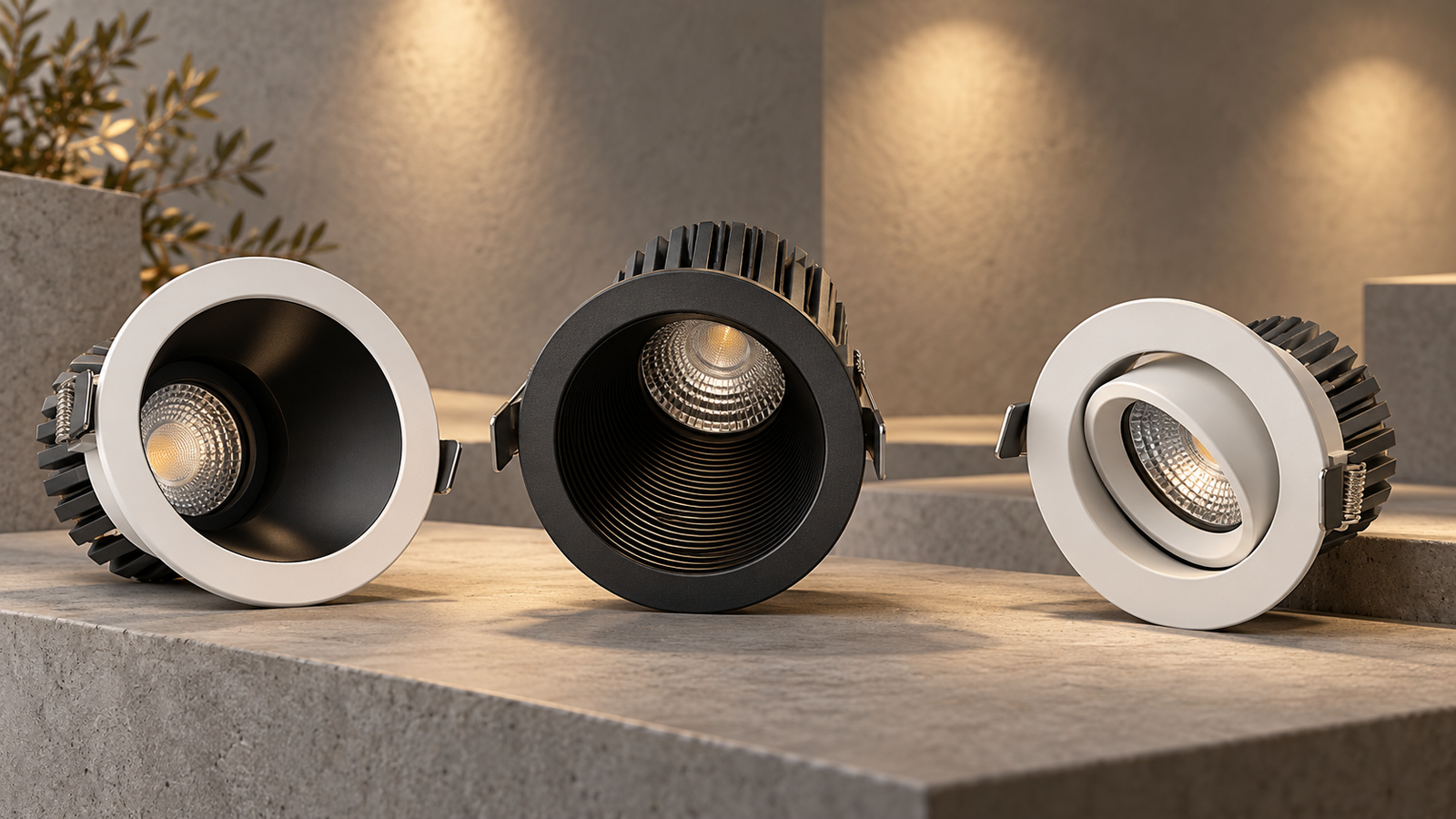
Colour rendering, flicker performance, beam control, dimming quality, and consistency between fixtures are just as important as wattage. Product selection should therefore be based on verified technical data, samples, and mock-ups where necessary.
Smart Lighting With KNX and DALI
A well-designed control system makes a complex lighting scheme simple to use. KNX smart home control can coordinate lighting with curtains, HVAC, sensors, keypads, and central functions. DALI and DALI-2 provide precise digital control of compatible luminaires, including dimming, grouping, scenes, and monitoring.
Control requirements should be planned before wiring begins. Early coordination prevents incompatible drivers, insufficient control cables, and unnecessary changes during installation. Scenes such as Welcome, Dinner, Entertain, Relax, Night, Away, and All Off can then be programmed around the owner’s routine.
Common Villa Lighting Mistakes
- Using too many downlights as the only source of illumination.
- Selecting fixtures before furniture and ceiling layouts are coordinated.
- Ignoring glare, beam angles, colour quality, and dimming compatibility.
- Mixing colour temperatures without a clear design reason.
- Leaving control-system decisions until late in construction.
- Using indoor-grade products in exterior or high-temperature locations.
- Skipping on-site focusing, scene setting, testing, and final commissioning.
From Concept to Commissioning
A coordinated villa lighting project moves through architectural review, lighting calculations, fixture selection, control design, shop drawings, installation coordination, programming, testing, focusing, and handover. NORIX provides architectural lighting design, engineered product selection, lighting supply, and installation and commissioning as one integrated workflow.
You can also explore selected lighting projects in Oman and international markets to see how design intent, products, control systems, and site execution come together.
Planning a Villa Lighting Project in Oman?
Early lighting coordination protects the architecture, reduces site changes, and produces a more comfortable and reliable result. If you are planning a new villa or renovating an existing home in Muscat or elsewhere in Oman, contact NORIX Lighting to discuss the design, products, control system, installation, and commissioning requirements.