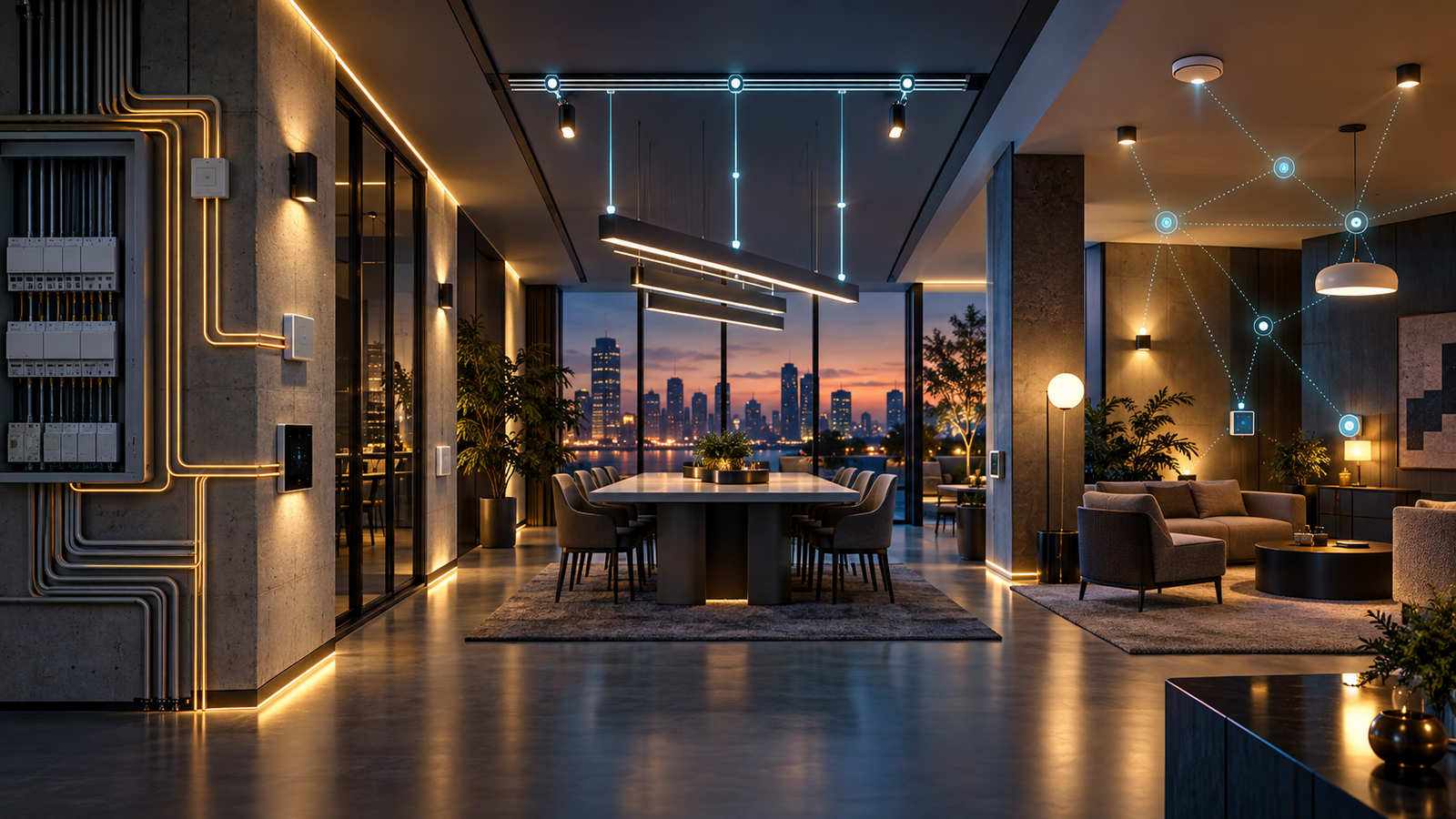
DALI is often described as a dimming protocol, but that description captures only a small part of what a well-designed DALI system can do. In a professional lighting project, DALI provides a digital communication layer that allows luminaires, sensors and control devices to be addressed, configured, monitored and reorganised without redesigning the power wiring.
For architects, consultants and building owners in Oman, understanding these capabilities early can improve flexibility, simplify maintenance and prevent control limitations after handover. Here are ten important DALI lighting control capabilities that go far beyond basic dimming.
1. Individual Luminaire Addressing
In a conventional switched circuit, every luminaire connected to that circuit normally behaves in the same way. DALI changes this by giving compatible control gear an individual digital address. A commissioning engineer can therefore identify and control one luminaire without physically separating it onto a dedicated control circuit.
This is particularly useful in offices, hospitality projects, showrooms and large residences where the final furniture layout or operating requirements may change after installation.
2. Flexible Groups Without Rewiring
DALI luminaires can be assigned to logical groups during commissioning. If a meeting room becomes two smaller rooms, or a retail layout is rearranged, the lighting groups can often be updated in software rather than by changing the control wiring.
The result is a more adaptable lighting system and lower disruption when a space is refurbished or repurposed.
3. Recallable Lighting Scenes
A scene is a stored combination of light levels that can be recalled with one command. Compatible DALI control gear can store multiple scene values, enabling smooth transitions between functional and atmospheric settings.
- Reception: daytime, evening and cleaning scenes
- Conference room: presentation, discussion and video-call scenes
- Restaurant: breakfast, dinner and after-hours scenes
- Villa: welcome, entertaining, relaxation and night scenes
Good scene design is not simply a programming exercise. It should be coordinated with the architecture, daylight, materials and intended use of each zone.
4. Bidirectional Status Feedback
DALI communication is bidirectional. A compatible application controller can send commands and query devices for information. Instead of assuming that a command was received, the control system can obtain useful status data from the lighting installation.
This feedback is one of the main differences between a professional digital lighting network and a basic analogue dimming arrangement.
5. Fault Detection and Easier Maintenance
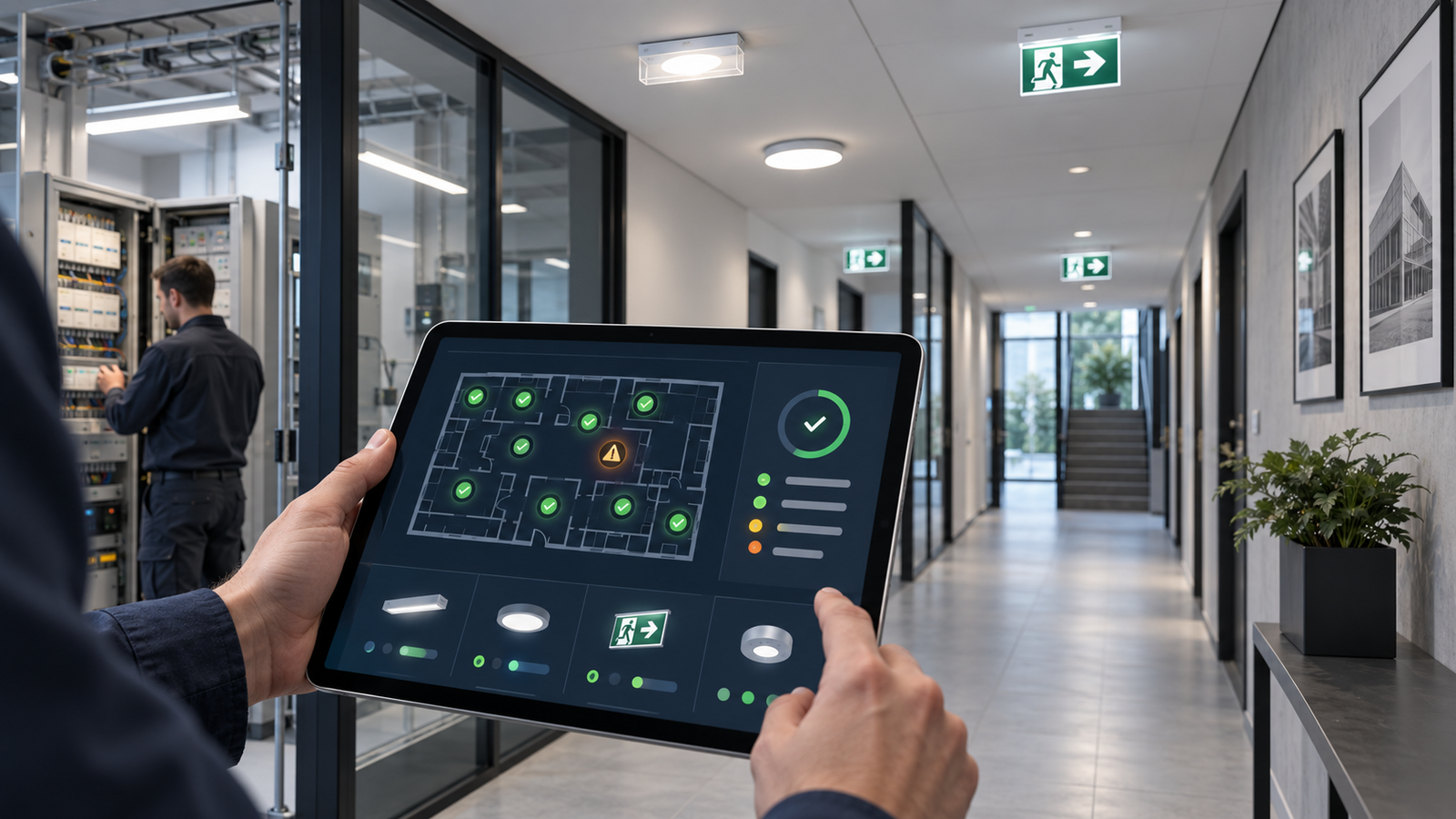
With the correct control gear and management software, a DALI system can help identify lamp, driver or communication faults. Maintenance teams can locate a problem more efficiently instead of inspecting every fitting manually.
Advanced D4i devices may also expose energy, diagnostic and maintenance information. These features depend on the exact certified products and system architecture, so they must be specified—not assumed—during design.
6. DT8 Tunable White and Colour Control
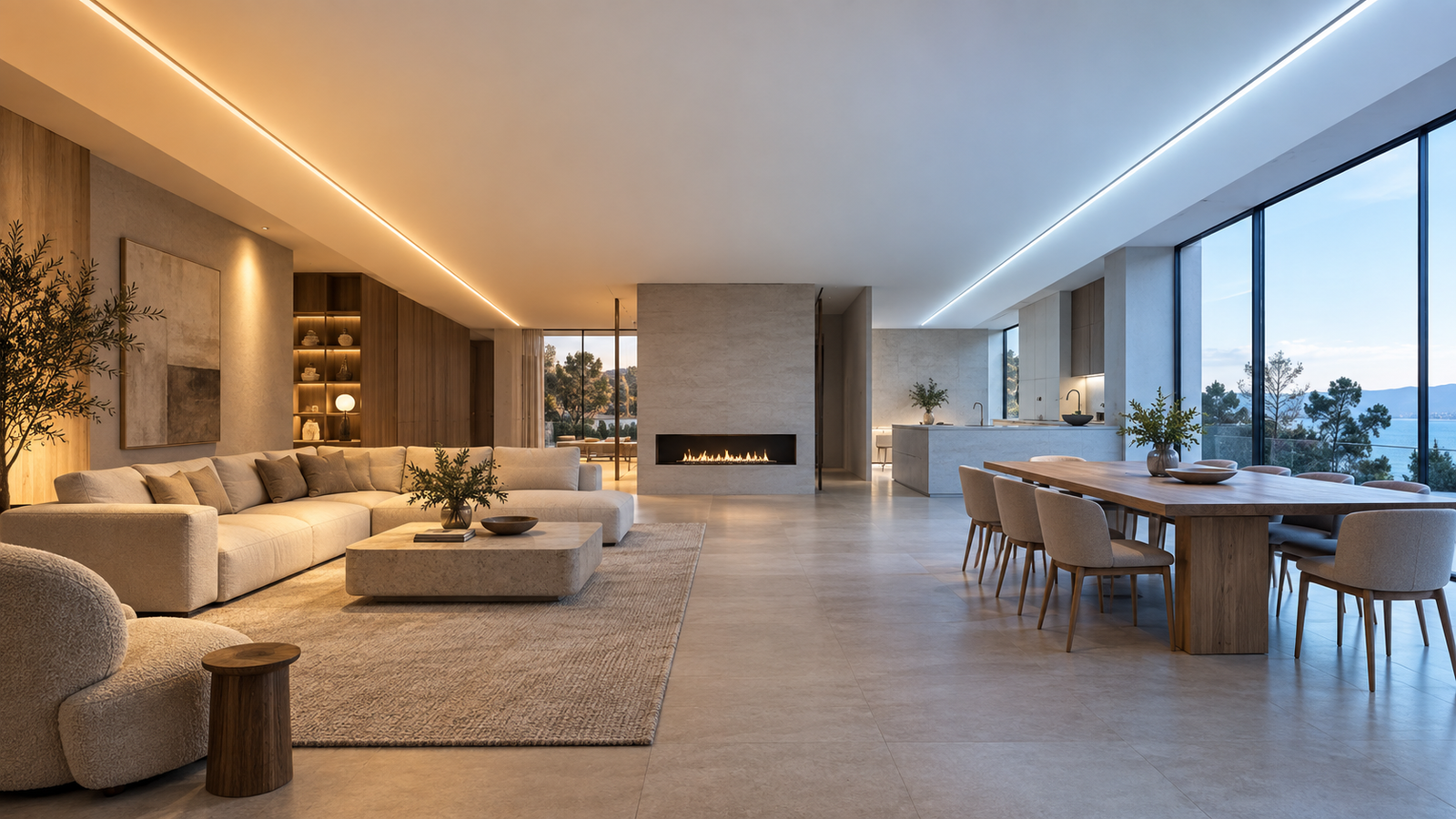
DALI Device Type 8, commonly called DT8, allows compatible colour-controllable drivers to receive coordinated colour commands through a single logical address. Depending on the product, this can include tunable white, RGBWAF colour control or xy-coordinate colour control.
For tunable white applications, the colour temperature can change from warm to cool while the system also manages intensity. This can support hospitality ambience, residential comfort, retail presentation and human-centric lighting strategies. The luminaire, driver, controller and software must all support the required DT8 mode.
7. Sensors and Input Devices with DALI-2
DALI-2 extends the ecosystem beyond control gear by standardising control devices, including application controllers and input devices. Compatible occupancy sensors, light sensors, push-buttons and other input devices can share the DALI bus with the lighting equipment.
This enables strategies such as occupancy-based control, daylight harvesting and local manual override. However, not every application controller supports every input-device type, so certified compatibility and project-specific testing remain essential.
8. Automated Emergency Lighting Tests
In projects using compatible self-contained emergency control gear, DALI can support scheduled function tests, duration tests, status reporting and central monitoring. This can reduce manual inspection effort and help facility teams maintain clearer test records.
Emergency lighting is a life-safety system. Its design, testing intervals, reporting and compliance must follow applicable local requirements and the approved emergency-lighting strategy. DALI is a monitoring and control tool; it does not replace proper emergency-lighting design.
9. Energy and Operational Data with D4i
D4i adds specific data and reporting capabilities for intelligent luminaires and connected lighting systems. Compatible devices can provide standardised energy data and selected diagnostic information that may be used by lighting-management platforms or building services teams.
This data can help operators understand consumption, compare areas and plan maintenance, but only where the selected drivers and controllers implement the relevant D4i features.
10. Integration with KNX and Building Management Systems
DALI is designed for lighting control at the luminaire level. KNX or a building management system can provide wider building-level logic across lighting, HVAC, blinds, schedules and user interfaces. A correctly selected gateway allows these systems to exchange commands and status information.
For example, KNX may manage room modes and occupancy logic while DALI handles the detailed addressing, dimming and monitoring of luminaires. The gateway, addressing structure and responsibility of each system should be defined before programming begins.
What DALI Cannot Do Alone
A DALI line is not automatically a complete smart-building system. Advanced sequences, graphical interfaces, time schedules, cross-system logic and remote management normally require a suitable application controller, gateway or lighting-management platform.
Likewise, a feature being part of the DALI family does not mean every installed product supports it. The design team should verify device certification, controller compatibility, addressing capacity, bus power, topology and commissioning requirements.
DALI Design Checklist for a Real Project
- Define every lighting zone, group and scene before commissioning.
- Confirm whether DALI-2, DT8, emergency or D4i functions are required.
- Check the exact compatibility of drivers, sensors, keypads and controllers.
- Coordinate DALI line capacity, bus power and gateway architecture.
- Decide which functions belong to DALI and which belong to KNX or the BMS.
- Specify testing, documentation, backups and final handover requirements.
- Allow time for on-site focusing, scene tuning and user training.
Final Recommendation
DALI delivers its greatest value when it is treated as an engineered digital lighting platform—not simply a dimming cable. Individual addressing, software-defined groups, scenes, feedback, sensors, colour control, emergency monitoring and system integration can create a lighting installation that is more flexible, maintainable and ready for future change.
NORIX designs, supplies, programs and commissions professional DALI and KNX lighting-control solutions for villas, hospitality, commercial and architectural projects across Oman. Explore our Smart Lighting & Home Control service or review our Lighting Management System approach. For a project-specific control strategy, contact NORIX before the electrical and control architecture is finalised.