Introduction
Lighting design plays a critical role in commercial projects such as hotels, shopping malls, office buildings, and large developments. Professional lighting design is not only about illumination but also about creating an experience, improving brand image, and increasing the value of the project.
modern commercial projects require advanced lighting solutions that combine architectural lighting, energy efficiency, and intelligent lighting control systems.
Why Lighting Design is Important for Large Projects
Lighting is one of the most important elements in commercial buildings. Poor lighting design can negatively affect the appearance, user experience, and functionality of a project.
Professional lighting design helps to:
- Enhance architectural features
- Improve customer experience
- Increase property value
- Reduce energy consumption
- Improve visual comfort
- Support branding and identity
- Create attractive environments
For hotels, malls, and commercial spaces, lighting directly impacts how people feel and interact with the space.
Types of Commercial Lighting Design
Different types of lighting are used in commercial projects.
1. Architectural Lighting
Used to highlight building design, facades, and interior architecture.
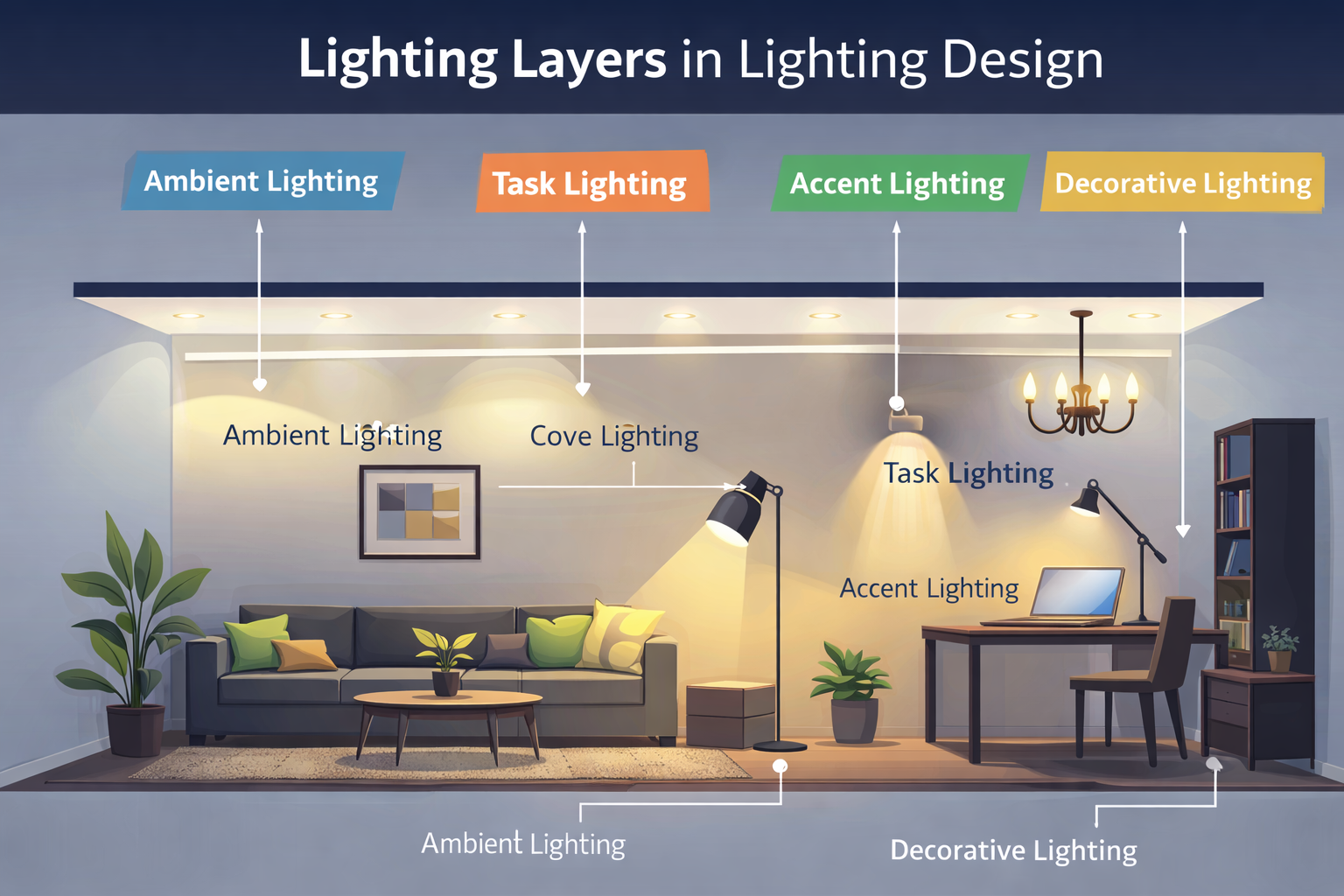
2. Ambient Lighting
Provides general illumination for large spaces such as lobbies, corridors, and halls.
3. Accent Lighting
Highlights products, walls, textures, and architectural elements.
4. Decorative Lighting
Adds visual appeal and enhances interior design.
5. Outdoor and Landscape Lighting
Used for building exteriors, pathways, and outdoor spaces.
Lighting Design Challenges in Commercial Projects
Large-scale projects come with specific challenges that require professional solutions.
- High ceilings and large spaces
- Energy consumption management
- Maintenance and accessibility
- Uniform lighting distribution
- Glare control
- Integration with control systems
- Long-term reliability
These challenges must be addressed during the design phase.
Lighting Control Systems for Commercial Projects
Modern commercial lighting design always includes lighting control systems.
Common systems include:
- DALI lighting control
- Smart lighting systems
- Scene control systems
- Motion sensors
- Daylight sensors
Lighting control systems help reduce energy consumption and improve flexibility.
Energy Efficiency and Cost Optimization
Energy efficiency is a major factor in commercial lighting design. Using LED lighting and intelligent control systems can significantly reduce operational costs.
Key strategies include:
- High-efficiency LED fixtures
- Dimming systems
- Daylight integration
- Smart control systems
- Optimized lighting layout
Proper lighting design can reduce energy costs while maintaining high performance.
Lighting Design Process for Commercial Projects
A professional lighting design process includes:
- Understanding project requirements
- Architectural analysis
- Lighting concept development
- Fixture selection
- Lighting calculations
- Control system design
- Layout design
- Installation support
- Testing and commissioning
Each step ensures a high-quality lighting solution.
Why Choose Professional Lighting Design Services
Working with a professional lighting design company ensures:
- Optimized lighting performance
- Reduced energy costs
- High-quality lighting experience
- Proper system integration
- Long-term reliability
- Compliance with standards
Professional lighting design is essential for successful commercial projects.
Conclusion
Lighting design is a key factor in the success of commercial projects. From architectural aesthetics to energy efficiency and user experience, professional lighting design adds significant value to any project.
For commercial projects in Oman, choosing the right lighting design and control system is essential for achieving modern, efficient, and attractive spaces.
Contact us for professional lighting design and lighting control solutions for your commercial projects .